

Skin
Vitiligo
White patches where the skin has lost its colour, on the face, hands or body.

Understanding it
What causes vitiligo?
Vitiligo happens when the cells that make skin pigment stop working in some areas. It isn't infectious and doesn't affect your general health.
Many patches respond to medical treatment. Patches that have stayed stable for a long time can be treated with vitiligo surgery (grafting) to bring back colour.
Common causes
- Autoimmune tendency
- Family history
- Stress or skin injury as triggers
- Other autoimmune conditions
How we help
Treatments for vitiligo
Your dermatologist recommends the right combination after examining your skin.
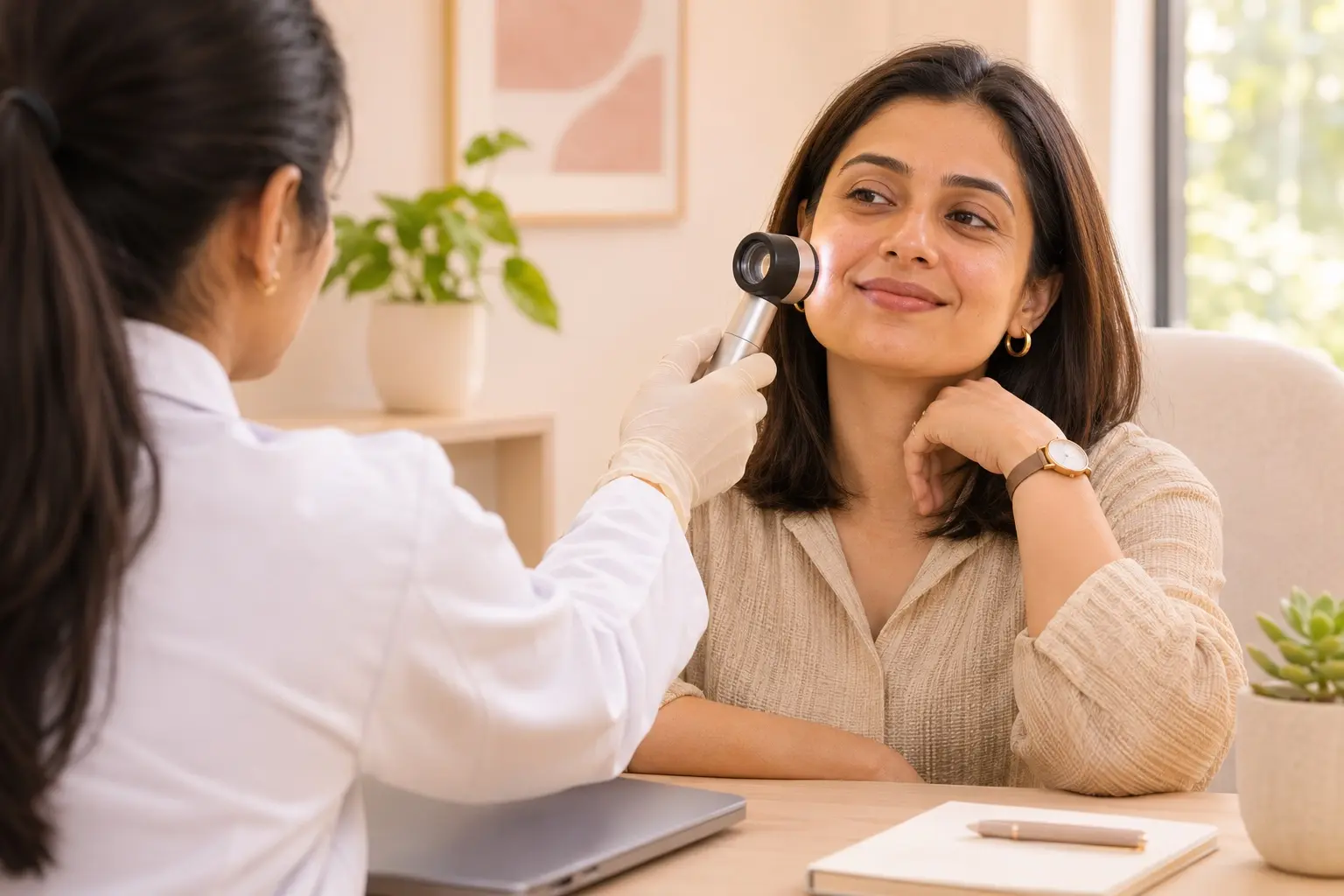
Dermatologist Consultation
An unhurried consultation with an MD dermatologist, including a digital skin analysis report and a personalised treatment plan.
View treatment
Mole, Wart & Minor Skin Procedures
Quick in-clinic removal of moles, warts, skin tags, cysts and milia, plus biopsies, earlobe repair and nail surgery.
View treatment


FAQ
Vitiligo: your questions
Is vitiligo contagious?
No. It can't spread from person to person.
When is surgery an option?
When patches have been stable, with no new or growing spots, for a period your dermatologist confirms.
Book your consultation
Tell us what's bothering your skin or hair. We'll take it from there.